
Blog
.png)
The CMO and CFO Are Speaking Different Languages. That Is Finally Changing.
CMOs know it. In their bones. Brand equity is one of the most powerful levers a business has. It shapes demand before a consumer ever opens a browser. It determines whether a product launch gets traction or gets ignored. It is the reason some brands command a premium and others compete on price alone. And yet... it is almost always the hardest budget to defend.

B2B Software Is Still Stuck in the BlackBerry Era. That Is About to Change.
In January 2007, Steve Jobs walked onto a stage in San Francisco and put up a slide of the competition. The Moto Q. The BlackBerry Pearl. The Nokia E62. The best smartphones the industry had to offer. Then he pointed out what they all had in common: fixed, plastic keyboards. The problem was not that the keyboards were bad. The problem was that they were always there, whether you needed them or not.

The Store Visit Is Not the Outcome. But It's Still Worth Measuring.
For brands with a physical presence, foot traffic has always felt like a meaningful signal. A customer walks through the door. That has to count for something. And it does. But for most of the industry, visitation measurement has been treated as an outcome in itself rather than a piece of a larger story.
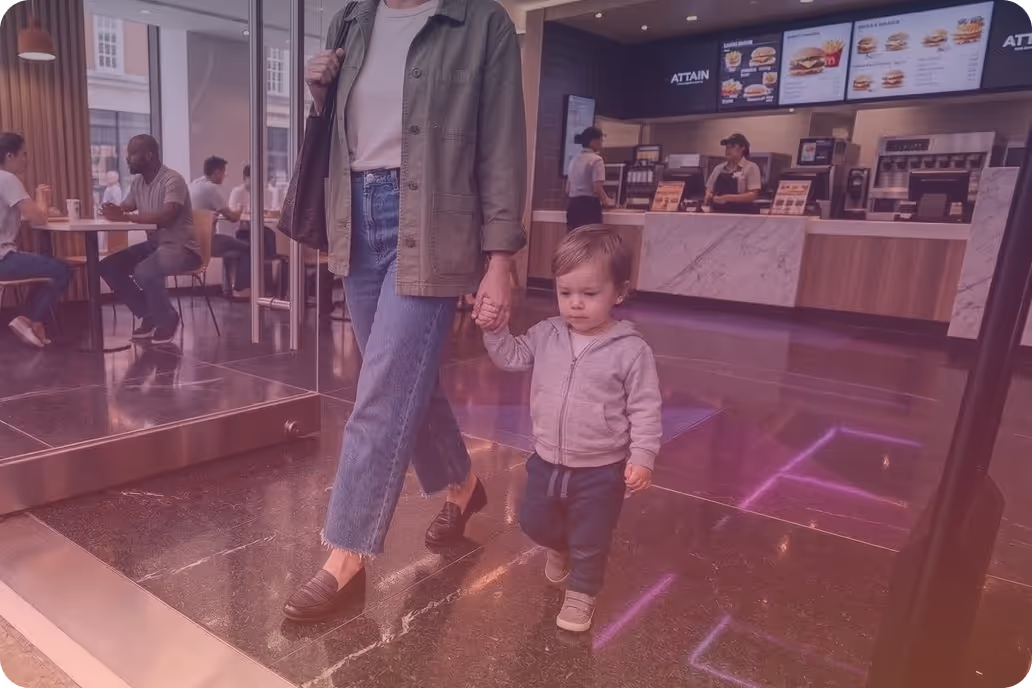
Brand Investment Has Always Worked. Now You Can Prove It.
Ask any experienced marketer whether brand investment matters and the answer is immediate. Of course it does. Brand shapes demand before a consumer ever enters a purchase decision. It determines whether a new product launch gets traction or gets scrolled past. It is the reason some companies command a premium and others compete on price alone. The challenge has never been whether brand works. The challenge has been proving it in terms that connect to how a business actually measures success. That is starting to change. And the opportunity it creates for marketers is significant.

When a Brand Changes Hands, Does Its Audience Follow?
The food and beverage industry is in the middle of one of its most active acquisition cycles in years. The deals keep coming, and the strategic logic behind them is consistent: large CPG companies are buying growth they can no longer generate organically, snapping up brands that have already won over a consumer base they want access to. But that raises a question that is harder to answer than it looks: when a brand changes hands, does the audience come with it?

The SaaS Market Is in Turmoil. Here's Why I've Never Been More Bullish.
The software sector just entered its fourth major sell-off since 2021. Over a trillion dollars in market cap erased. The WCLD cloud index is down 54% over five years while the NASDAQ is up 61% over the same period. The narrative I keep hearing is consistent: AI is coming for SaaS, and it is coming fast. I think that narrative is right. I just think the market is painting with too broad a brush.

Ready to start driving outcomes?
Create an account instantly to get started or contact us to schedule a custom demo.


